
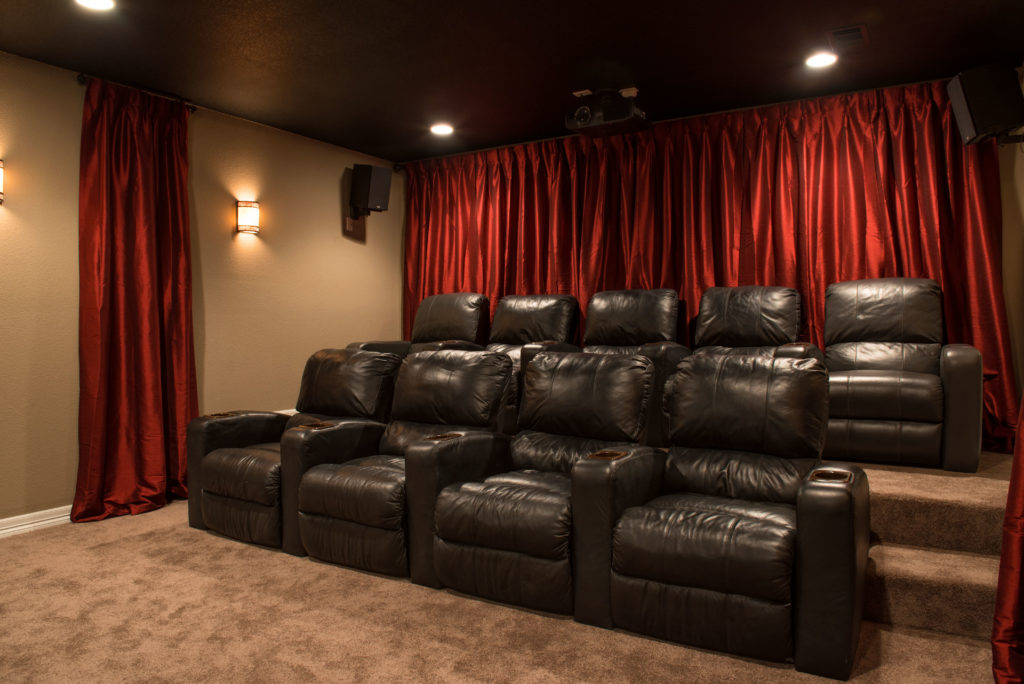
So you’re looking for ideas for your basement theater and coming up empty. All the basement design ideas, pictures and tips are already a few steps ahead of you, and you want more control over building your basement. You also want to know about the basic concepts of basement theaters before starting. If that’s you, look no further: this should help clear up the initial steps before designing a basement theater.
How much room do you have for your basement theater?
The first question is size. Take into consideration how large the room is, and where the screen should be located. Determine where the projector will be, which will let you know what size the actual screen will be (mark the corners of the screen for reference later). If the room, or planned room, in your future basement theater is rectangular, you want to aim for fewer, longer rows. But keep in mind the size of the screen relative to the corners.
“Serious” Home Theater vs. Family Friendly
Next, you need to choose your atmosphere. Typically this means determining whether you want more of a casual “family room” or a serious home theater. The family room would have more flexibility in its use, and could serve more functions than watching movies, such as multiple video game systems, or locations for more comfortable reclining. The more serious home theater, however, would primarily serve as a location for watching movies, and would be designed to look like an actual movie theater.
Building the Dream Basement Theater
And finally, you need to decide whether you want to hire professionals to be involved with the construction of your basement theater as part of basement finishing in Highland Ranch. In theory, if you have a lot of experience in construction, wiring, and sound, you should be able to carry out the basement theater with a decent amount of planning and execution. However, if you don’t have the experience and also don’t want to use the cheaper surround sound systems at your local electronics store, you want to consider hiring basement finishing professionals, who can take your newly ironed out plan and make it happen at the greatest level of quality.
Frequently Asked Questions (FAQs)
How much space do I need for a basement theater?
The size of your basement theater depends on screen placement, seating layout, and projector distance. Measure the room carefully and determine where the screen and projector will be installed first. In rectangular rooms, longer rows with fewer seats per row typically provide better viewing angles and sound distribution.
Where should the screen and projector be placed?
The screen should be positioned on a wall that allows optimal viewing from all seats without obstruction. Projector placement depends on the screen size and throw distance requirements. Marking the screen corners in advance helps visualize proportions and seating layout before installation begins.
What is the difference between a serious home theater and a family-friendly media room?
A serious home theater is designed primarily for movie watching, often featuring tiered seating, focused lighting, and enhanced acoustics to replicate a cinema experience. A family-friendly media room offers more flexibility, allowing space for gaming systems, casual seating, and multipurpose use beyond movies.
Can I build a basement theater myself?
If you have experience in construction, electrical wiring, and audio system setup, a DIY basement theater is possible with detailed planning. However, professional installation ensures proper wiring, sound calibration, lighting design, and overall build quality — especially for high-end audio and visual systems.
Should I hire professionals for basement theater construction in Highlands Ranch?
Hiring professionals for basement finishing in Highlands Ranch can help ensure your theater is built safely and efficiently. Experienced contractors understand soundproofing, moisture control, wiring codes, and layout optimization, delivering a high-quality theater that enhances both performance and home value.