
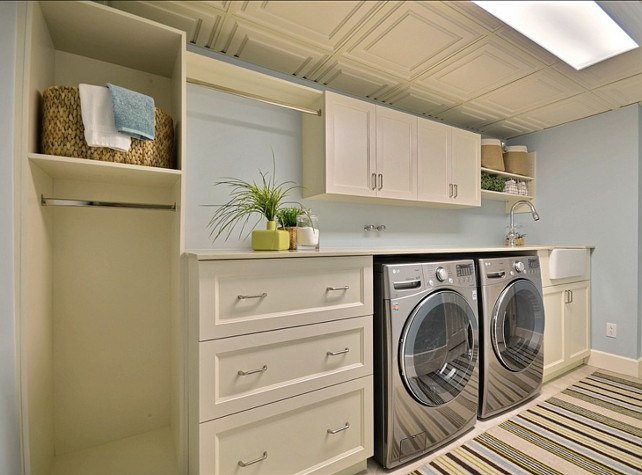
In the age of Pinterest and HGTV, laundry room envy is inevitable when browsing through images of bright and stylish laundry rooms. If your current laundry room is tiny or difficult to navigate, consider relocating the washer and dryer to create a basement laundry room.
A basement laundry room may be a perfect addition during basement finishing in Highland Ranch. The relocation offers ample square footage for storage, folding, and hanging. And the downstairs location prevents the loud dryer’s rumble from keeping you up at night. Before beginning renovations, there are a few important things to consider.
In your laundry room, a decent-sized space with enough square footage for countertops, cabinets, and shelves is important for usability and sellability. Consider if the space is ideal for a side-by-side washer and dryer or a stackable washer and dryer.
Laundry Room Layout Planning
Before diving into plumbing or electrical work, it’s important to map out your basement laundry room’s layout. A well-planned layout not only makes daily chores easier but also ensures you make the most of the available space. Think about how you’ll move through the room, from loading the washer to drying, folding, and storing clean clothes, and arrange appliances and work areas to support that flow.
Start with the main appliances. Decide whether a side-by-side washer and dryer or a stackable unit works best for your square footage. Side-by-side models give you more countertop space above for folding, while stackables free up room for vertical storage.
Key workflow zones to consider:
- Washing and drying zone: Position appliances close to water and vent hookups.
- Folding area: A countertop, table, or wall-mounted fold-out surface.
- Hanging space: Rods, retractable lines, or a freestanding rack for air-drying.
- Storage: Cabinets, shelves, or baskets for detergents, fabric softeners, and cleaning supplies.
Don’t forget about accessibility. Leave enough clearance around appliances for maintenance, and consider adding anti-fatigue mats for comfort during long laundry sessions. By planning your layout early, you’ll create a functional, efficient, and organized space that makes laundry less of a chore.
Key Considerations for Setting Up Your Basement Laundry Room
Before you start moving appliances downstairs, it’s important to address the core elements that will make your basement laundry room both functional and safe: plumbing, electrical setup, and thoughtful design.
1. Plumbing
Unless you are an experienced plumber, it’s best to consult a licensed professional. They can assess your basement and determine whether the space is suitable for a laundry setup. A plumber will help with:
- Rerouting or installing water supply lines and a drain for the washer
- Installing a vent for the dryer
- Providing a realistic estimate for the scope of work
- Checking if the existing plumbing in your basement can be reused
Proper plumbing is essential to prevent leaks and ensure everything runs smoothly—especially if your basement is unfinished.
2. Electrical
You’ll also need to hire a licensed electrician to ensure your appliances run safely and efficiently. Key electrical considerations include:
- Installing a 220V outlet for the dryer
- Ensuring standard outlets are available for the washer and other devices
- Providing GFCI protection (required in laundry areas)
- Positioning the laundry room near an exterior wall for easier vent installation
If venting through an interior wall is necessary, expect higher costs and a more complex installation.
Beyond installation, it’s important to make sure your setup complies with local building codes. A licensed electrician can confirm that wiring, outlets, and breaker capacity meet safety requirements. For added safety and comfort, consider:
- Ventilation: Gas dryers require proper venting to avoid carbon monoxide buildup.
- Anti-slip mats: Reduce the risk of slipping on wet floors.
- Proper drainage slope: Prevents water from pooling around appliances.
- Accessible shut-off valves and breaker switches: Make it easier to respond quickly to emergencies.
Following electrical safety standards and building codes not only keeps your home safe but also ensures your basement laundry room is both functional and compliant.
3. Design
Whether you’re going the DIY route or working with an interior designer, it’s important to make your basement laundry room both functional and inviting. Use tools like SmartDraw or other online layout programs to visualize your space. For a well-designed laundry room, consider:
- Storage: Open shelving, upper cabinets, or over-the-appliance organizers
- Lighting: Add task lighting and warm overhead fixtures for a cozy feel
- Color scheme: Choose calm, neutral tones to brighten the space
- Decor: Hang wall art, use matching baskets, or even add a plant for a personal touch
Gone are the days of dark, unfinished laundry corners; your basement laundry room can be just as stylish as the rest of your home.
Bringing Function and Style to Your Basement
A basement laundry room is more than a home improvement project; it’s an upgrade that adds valuable space, better organization, and a quieter environment. With the right plumbing, code-compliant electrical setup, and a thoughtful design, it can be both functional and beautiful.
Small details such as smart storage solutions, layered lighting, and durable, moisture-resistant finishes make a big difference in comfort and efficiency.
By planning your layout carefully and incorporating features that match your style, you can transform a simple basement corner into a safe, stylish, and highly efficient laundry space you’ll appreciate for years to come.
Frequently Asked Questions
Can a Laundry Room Be in the Basement?
Yes, relocating your laundry room to the basement is a common and practical upgrade. It provides more room for appliances, storage solutions, and folding areas without taking up valuable living space upstairs. With proper plumbing, ventilation, and electrical setup, a basement laundry room can be just as functional and inviting as any other part of your home.
Why Is Laundry in the Basement?
Basements offer extra square footage, help reduce noise from machines, and often make it easier to add storage or improve layout.
How to Transform a Basement Laundry Room?
Begin with layout planning to ensure a smooth workflow between your washing, drying, folding, and storage zones. Address essential upgrades first, such as proper plumbing, code-compliant electrical work, and adequate ventilation to keep the space safe and efficient. Then, focus on design details, add shelving or cabinets for storage, choose calm colors to brighten the room, and layer your lighting for both function and style.
What Is a Utility Room in a Basement?
It’s a dedicated space in the basement for washers, dryers, and other systems like HVAC, designed for practical home use and organization.