
Key Takeaways
- Basement bars work in both small and large spaces with smart planning
- Layout, storage, and lighting matter more than size
- Small bars focus on function, large bars focus on comfort and hosting
- A finished basement bar can boost home value and daily enjoyment
A basement bar is one of the most popular upgrades homeowners choose when finishing or remodeling a basement. It turns unused space into a place where family and friends can relax, watch games, or celebrate special moments.
Many homeowners believe they need a large basement to build a bar, but that is not the case. With the right design, even a small basement can support a stylish and useful bar area.
Whether you want a simple serving space or a full entertainment zone, there are basement bar ideas that fit every layout.
This guide covers planning tips, small and large basement bar ideas, popular styles, and practical features to help you design a bar that fits your home and lifestyle, whether you are exploring Basement finishing in Highlands Ranch or elsewhere.
Planning Your Basement Bar
Good planning is the key to a successful basement bar. Before choosing finishes or seating, focus on the basics.
Measure and Study Your Layout
Start by measuring your basement and noting ceiling height, walls, stairs, and support posts. These elements affect where your bar can go. Some bars work best along a wall, while others fit well in corners or open areas.
Decide Between a Wet Bar or a Dry Bar
A wet bar includes a sink and plumbing. This makes cleaning and drink preparation easier but increases costs. A dry bar omits the sink and focuses on storage, counter space, and appliances such as a fridge. Many small basement bars are well-suited for dry bars.
Set a Clear Budget
Your budget will guide material and feature choices. Custom cabinetry, stone counters, and built in appliances cost more, but they also last longer and add value. A clear budget helps avoid surprises during construction.
Small Basement Bar Ideas
Small basements can still support great bar designs when space is used wisely.
Wall-Mounted Basement Bar
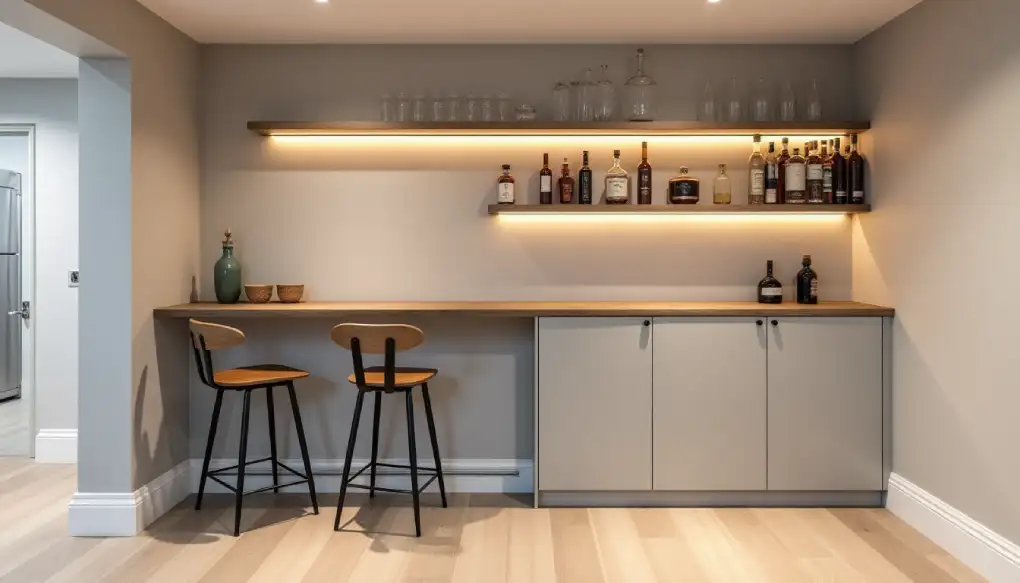
A wall-mounted bar is perfect for narrow spaces. A slim counter paired with shelves or cabinets above provides storage without blocking walkways. This setup works well in finished basements with limited square footage.
Under Stair Bar Design
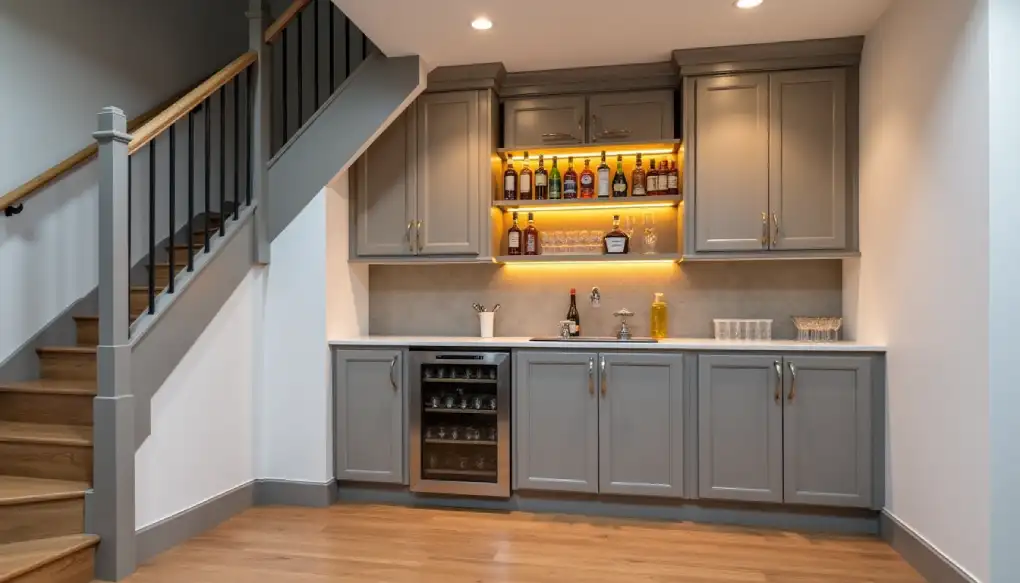
The area under the basement stairs is often unused. This space can become a compact bar with cabinets, shelving, and accent lighting. It is a smart way to add functionality without taking up space.
Corner Bar Layout
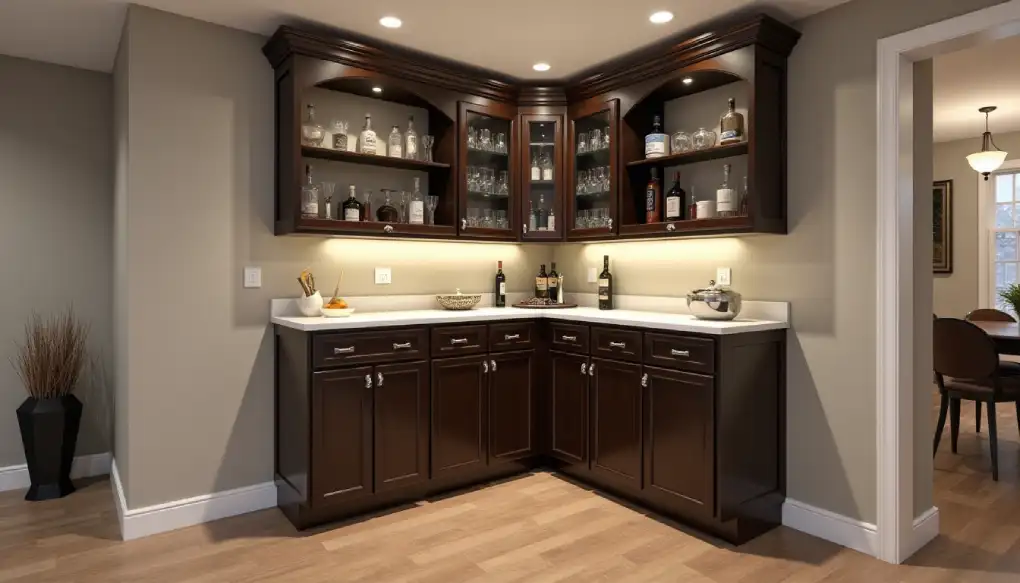
Corner bars use space that might otherwise be wasted. An L-shaped counter in a corner provides enough space to serve drinks and store supplies while keeping the rest of the basement open.
Open Shelving for Small Bars
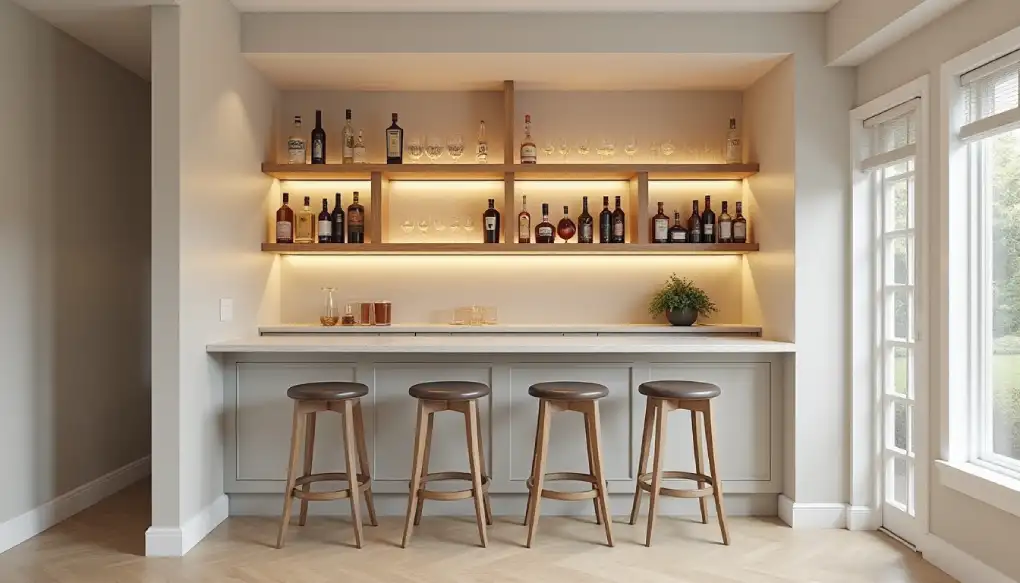
Open shelves make a small bar feel larger and lighter. They also keep glasses and bottles easy to reach. Light wood or neutral finishes help the space feel less crowded.
Compact Bar Cart Style
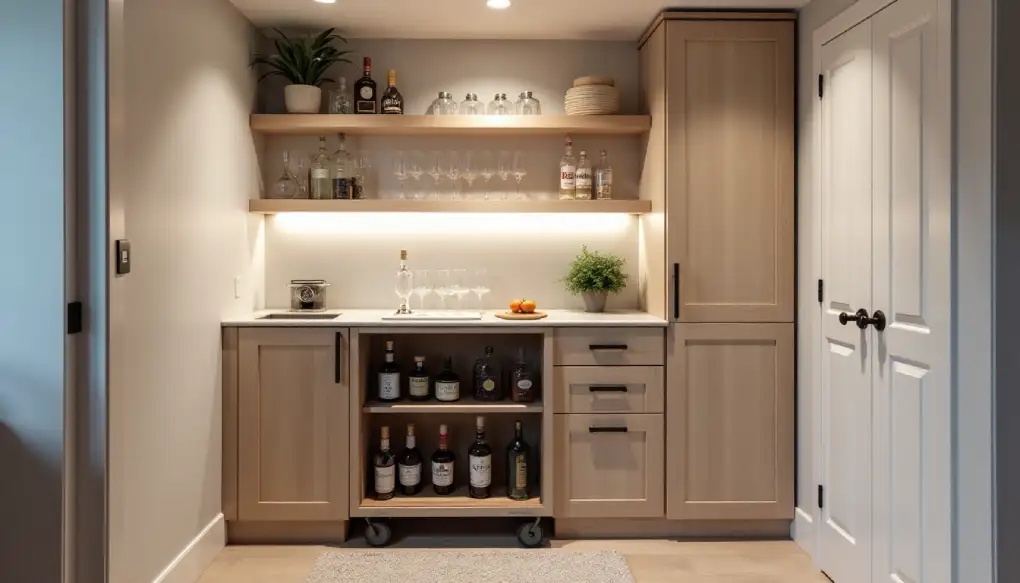
For very small basements, a built-in bar cart-style design works well. It includes a small counter, storage below, and minimal shelving above. This approach keeps the design flexible and budget-friendly.
Large Basement Bar Ideas
Large basements allow for more creative designs and seating options.
L-Shaped and U-Shaped Bars
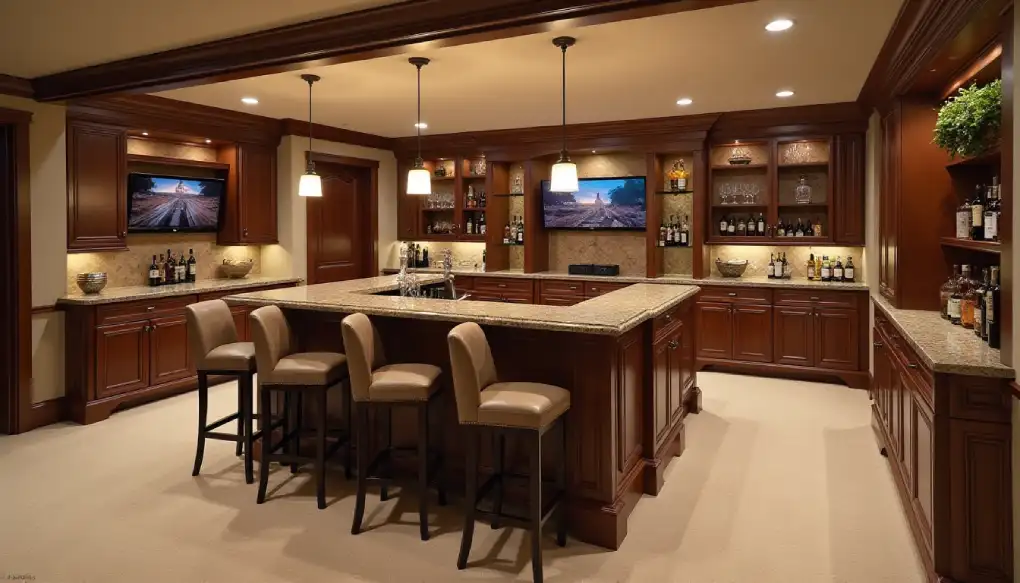
These layouts offer more counter space and seating. They are ideal for hosting guests and creating a social atmosphere. An L or U-shaped bar also helps separate the bar area from the rest of the basement.
Island Style Basement Bar
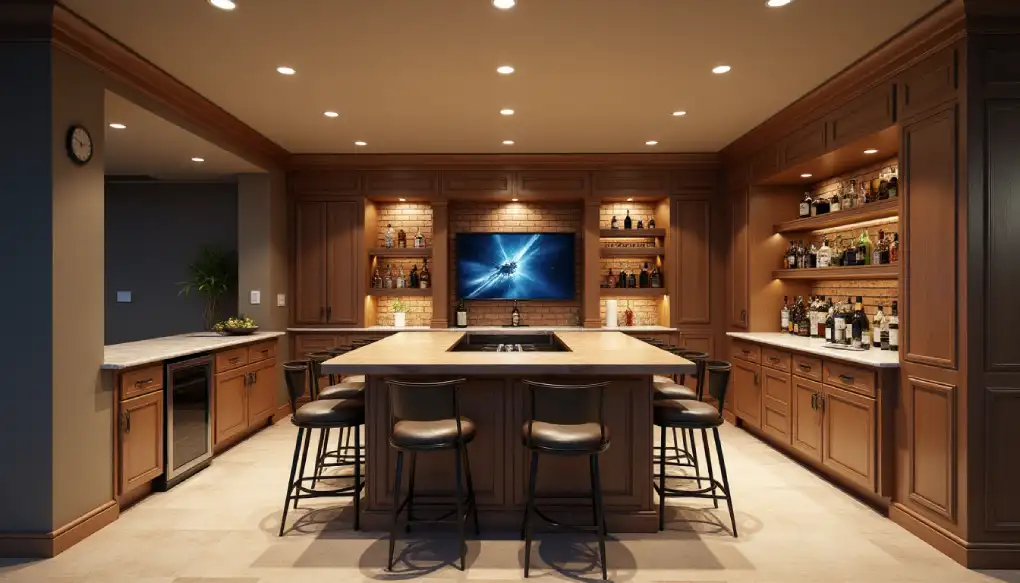
An island bar works well in open basement layouts. It creates a central gathering spot and allows traffic to flow around it. Island bars often include seating on multiple sides.
Built-In Storage and Appliances
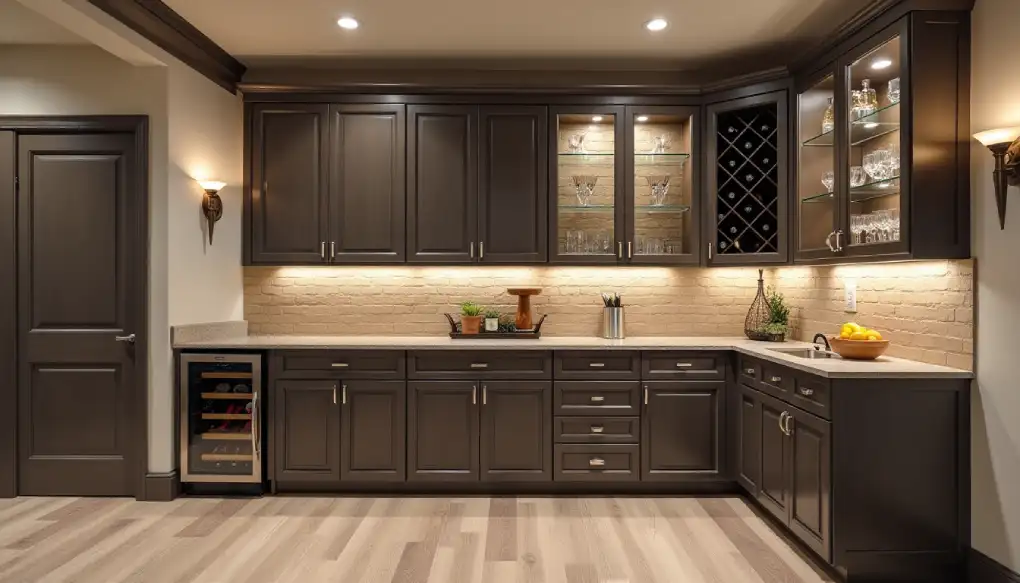
Larger bars can include wine racks, beverage coolers, and glass storage. Built-in features keep the space organized and professional-looking.
Lounge and Seating Areas
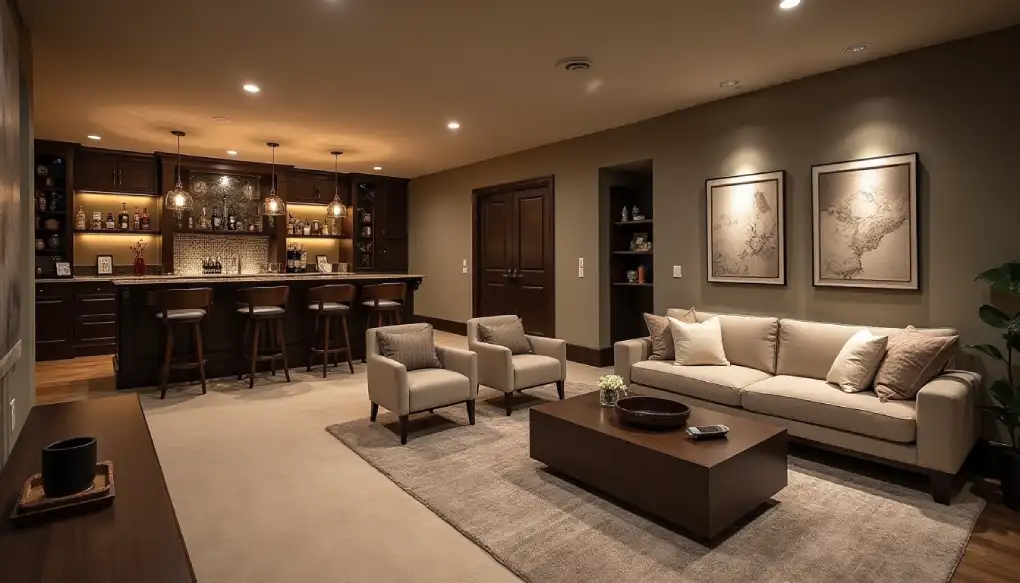
A large basement bar often works best when paired with lounge seating. Sofas, chairs, or a game table nearby make the space more inviting and comfortable for longer gatherings.
Popular Basement Bar Styles
Choosing a style helps guide materials, colors, and decor.
Rustic Basement Bar
Rustic bars use wood finishes, stone accents, and warm lighting. This style feels cozy and works well in family homes.
Modern Basement Bar
Modern bars focus on clean lines, smooth surfaces, and simple color palettes. They pair well with contemporary basement designs and minimal decor.
Classic Pub Style Bar
A pub-style bar uses darker wood tones, traditional stools, and classic lighting. It creates a familiar and comfortable feel.
Lounge or Speakeasy Style
This style uses softer lighting, rich colors, and textured materials. It works well in larger basements designed for entertaining adults.
Lighting, Seating, and Decor Tips
The right details can make or break a basement bar.
Basement Bar Lighting
Basements need layered lighting. Overhead lights provide general brightness, while pendant lights highlight the bar counter. Accent lighting under shelves or cabinets adds warmth and style.
Choosing the Right Seating
Bar stools should match the counter height and provide comfort. Stools with backs are better for longer sitting. Leave enough space between stools to avoid crowding.
Decor That Fits the Space
Decor should add personality without clutter. Mirrors help reflect light and make basements feel larger. Simple wall art or bottle displays add interest without overwhelming the space.
Functional Add-Ons to Consider
Extra features can make your basement bar more useful.
- Beverage fridge or mini fridge
- Wine storage or racks
- Built-in sink for wet bars
- Trash and recycling pull-outs
- Nearby TV or sound system
Choose features based on how you plan to use the bar most often.
Bringing Your Basement Bar to Life
Basement bars are one of the best ways to upgrade a finished basement, regardless of size. Small basements benefit from smart layouts and efficient storage, while large basements accommodate seating, storage, and entertainment. With careful planning and quality construction, a basement bar can become the heart of your home.
If you are ready to add a custom basement bar as part of a basement finishing or remodeling project, contact Brothers Construction today.
Our team can help design and build a basement bar that fits your space, style, and budget.
Frequently Asked Questions
What Is the Difference Between a Wet Bar and a Dry Bar?
A wet bar includes a sink and plumbing, making drink preparation and cleanup easier. A dry bar does not include plumbing and focuses on storage, counters, and appliances.
Can a Small Basement Really Fit a Bar?
Yes, small basements can fit a bar with the right layout and design choices. Wall-mounted, corner, and under-stair bars are ideal for limited space.
What Are Affordable Basement Bar Ideas?
Dry bars, open shelving, and simple cabinetry help reduce costs. Using durable yet budget-friendly materials also helps keep expenses manageable.
What Lighting Is Best for a Basement Bar?
A mix of overhead lighting and pendant lights works best for function and style. Accent lighting adds warmth and helps create a relaxed atmosphere.
Does a Basement Bar Add Home Value?
A professionally finished basement bar can make your home more appealing to buyers. It also improves how you use and enjoy your living space.